 |
10Duke Enterprise C++ SDK
|
|
10Duke Enterprise C++ SDK
|
#include <OIDCSessionImpl.h>
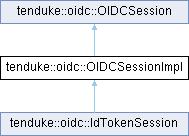
Default implementation of tenduke::oidc::OIDCSession.
This class is not thread-safe: the methods read and replace the session state without synchronization. To use the session from more than one thread, wrap it in tenduke::oidc::SerializedOIDCSession. The exception is abortLogin(), which can be called from another thread.
Public Member Functions | |
| OIDCSessionImpl (std::unique_ptr< tenduke::oidc::OIDCState > state, const std::shared_ptr< const tenduke::oidc::OIDCLogin > &oidc, const std::shared_ptr< const tenduke::oidc::OIDCClient > &oidcClient, const std::shared_ptr< tenduke::time::Clock > &clock, const std::shared_ptr<::tenduke::oidc::OIDCSessionEventListener > &eventListener=nullptr, uint64_t validitySafetyMarginS=DEFAULT_SAFETY_MARGIN_S, std::chrono::milliseconds loginTimeout=DEFAULT_SESSION_LOGIN_TIMEOUT) | |
| Constructs new instance. | |
| void | abortLogin () override |
| Aborts an ongoing login flow. | |
| void | ensureValidSession () override |
| Checks that the OIDC session is valid, but if it is NOT, either refreshes the access token or authenticates the user. | |
| std::string | getAccessToken () override |
| Returns access token of the session. | |
| std::shared_ptr< const tenduke::oidc::OIDCState > | getOIDCState () override |
| Returns the current OIDC-state for inspection. | |
| bool | heartbeat () override |
| Executes a heartbeat with the backend, checking that the current access token really works. | |
| void | invalidate () override |
| Invalidates the session. | |
| bool | isValid () override |
| Checks that local session is valid. | |
| void | reEstablish () override |
| Re-establishes the session: Tries first to refresh the state, if it fails, re-authenticates the user. | |
| void | refresh () override |
| Forces refresh of the session. | |
Static Public Attributes | |
| static const std::uint64_t | DEFAULT_SAFETY_MARGIN_S = 30 |
| Default safety margin in seconds for checking access token expiration. | |
Protected Member Functions | |
| virtual bool | hasRefreshableState () |
| Checks if the session has state, which can be refreshed. | |
| virtual void | refreshOrLogin () |
| Performs either refresh, or if it fails, new login. | |
| virtual void | login () |
| Performs login. | |
| bool | isValidAt (std::int64_t expiresAt) const |
| Checks if a token expiring at expiresAt (epoch seconds) is still valid, minding the safety margin, i.e. | |
| std::uint64_t | effectiveSafetyMarginS () const |
| Returns the safety margin in seconds: validitySafetyMarginS, capped to half of the token lifetime if the lifetime is known. | |
| virtual std::int64_t | getTokenExpiresAt () const |
| Returns expiration time (epoch seconds) of the token, which determines validity of this session. | |
| void | recordTokenLifetime () |
| Records the lifetime of the token just received, i.e. | |
Protected Attributes | |
| std::mutex | loginMutex |
| Guards loginRequest and abortRequested. | |
| bool | abortRequested = false |
| Set by abortLogin(), cleared when a login starts. | |
| std::shared_ptr< tenduke::oidc::OIDCState > | state |
| The OIDC-state. | |
| std::shared_ptr< tenduke::oidc::OIDCLoginRequest > | loginRequest |
| Current login request. | |
| const std::chrono::milliseconds | loginTimeout |
| Login timeout. | |
| const std::uint64_t | validitySafetyMarginS |
| Safety margin in seconds for checking if access token has expired. | |
| std::uint64_t | tokenLifetimeS = 0 |
| Lifetime in seconds of the current token, recorded when the token was received. | |
| bool | tokenLifetimeKnown = false |
| true if tokenLifetimeS is known. | |
| const std::shared_ptr< tenduke::time::Clock > | clock |
| Clock for checking session validity locally. | |
| const std::shared_ptr< const tenduke::oidc::OIDCLogin > | oidc |
| Service to perform OIDC login. | |
| const std::shared_ptr< const tenduke::oidc::OIDCClient > | oidcClient |
| The OIDC-client. | |
| const std::shared_ptr< tenduke::oidc::OIDCSessionEventListener > | notify |
| Listener for OIDC session events. | |
| tenduke::oidc::OIDCSessionImpl::OIDCSessionImpl | ( | std::unique_ptr< tenduke::oidc::OIDCState > | state, |
| const std::shared_ptr< const tenduke::oidc::OIDCLogin > & | oidc, | ||
| const std::shared_ptr< const tenduke::oidc::OIDCClient > & | oidcClient, | ||
| const std::shared_ptr< tenduke::time::Clock > & | clock, | ||
| const std::shared_ptr<::tenduke::oidc::OIDCSessionEventListener > & | eventListener = nullptr, | ||
| uint64_t | validitySafetyMarginS = DEFAULT_SAFETY_MARGIN_S, | ||
| std::chrono::milliseconds | loginTimeout = DEFAULT_SESSION_LOGIN_TIMEOUT ) |
Constructs new instance.
| state | initial state. Pass nullptr if no initial state and first activity requires login |
| oidc | service for OIDC-login |
| clock | clock for checking if access token is still valid |
| oidcClient | OIDC-client |
| eventListener | for listening session events. Optional. |
| validitySafetyMarginS | safety margin (seconds) used when checking validity of access token. The token is considered expired this many seconds before its actual expiration time, so that the session refreshes the token before it expires, to avoid delays and clock-skews. For tokens that the session has received (by login or refresh), the margin is capped to half of the token lifetime, so that short-lived tokens are not considered expired immediately. Note that the server can still reject a token that is locally considered valid (e.g. revoked token): the application must be prepared to refresh and retry |
| loginTimeout | timeout for login. Prevents login to hang indefinitely e.g. when user accidentally closes the browser. When the timeout occurs, the login request is aborted and related resources are released. If the timeout is zero, no timeout is applied. |
|
overridevirtual |
Aborts an ongoing login flow.
Used to abort a login flow. One example use case is when the login is done with the default OS browser and the user has closed the browser window or the tab containing the login screen: The application could show a screen with a button on it to abort the login.
This method does nothing if there is no ongoing login flow.
This method can be called from another thread.
Implements tenduke::oidc::OIDCSession.
|
overridevirtual |
Checks that the OIDC session is valid, but if it is NOT, either refreshes the access token or authenticates the user.
Call this method before doing request which uses the access token (method getAccessToken()). You do not need call this method unless you want to use access token: E.g. it is unnecessary to schedule a task for this.
Valid OIDC session requires a non-expired access token. If the access token has expired, this method tries to refresh the access token. If the refresh fails because the the refresh token has expired or if there is no valid session in the first place (i.e. there is no access token), the service starts login flow.
Note that this method cannot guarantee that the next request with the access token does not fail. For possible reasons, see method isValid().
Because of this, requests using the access token should prepare to handle HTTP 401 errors by calling this method again.
| tenduke::InterruptedException | when e.g. login was aborted |
| tenduke::TimedOut | when login times out or concurrent thread times out waiting to execute this method |
Implements tenduke::oidc::OIDCSession.
|
overridevirtual |
Returns access token of the session.
| tenduke::TimedOut | when concurrent access times out |
Implements tenduke::oidc::OIDCSession.
|
overridevirtual |
Returns the current OIDC-state for inspection.
The state MUST NOT be modified.
| tenduke::TimedOut | when concurrent access times out |
Implements tenduke::oidc::OIDCSession.
|
protectedvirtual |
Returns expiration time (epoch seconds) of the token, which determines validity of this session.
Reimplemented in tenduke::oidc::IdTokenSession.
|
overridevirtual |
Executes a heartbeat with the backend, checking that the current access token really works.
The heartbeat does not modify the state, even if the credentials are defunct. Typical reaction after false is to call reEstablish().
IMPORTANT: Do not call this repeatedly (e.g. schedule a task to execute heart beats). Also, you don't need to call this just before executing an API call. We trust that normally the local state is in sync with the backend and using OIDCSession::ensureValidSession() is usually enough. This method should only be used when there is doubt that the local session state is not in sync with the backend.
| tenduke::TimedOut | when concurrent access times out |
| tenduke::http::HTTPRequestException | if the HTTP-status code indicates error |
| tenduke::http::HTTPException | in other HTTP-related issues |
| tenduke::net::NetworkingException | e.g. host not found, network connection issues |
Implements tenduke::oidc::OIDCSession.
|
overridevirtual |
Invalidates the session.
| tenduke::TimedOut | when concurrent access times out |
Implements tenduke::oidc::OIDCSession.
|
overridevirtual |
Checks that local session is valid.
This method checks that there is a session and it has not expired.
Note that this method only checks the local session information, it does not verify the state from the backend. This means that requests using the access token might fail even if this method returns true, because .e.g.
| tenduke::TimedOut | when concurrent access times out |
Implements tenduke::oidc::OIDCSession.
|
protected |
Checks if a token expiring at expiresAt (epoch seconds) is still valid, minding the safety margin, i.e.
now + effectiveSafetyMarginS() < expiresAt.
|
protected |
Records the lifetime of the token just received, i.e.
time from now until getTokenExpiresAt().
|
overridevirtual |
Re-establishes the session: Tries first to refresh the state, if it fails, re-authenticates the user.
IMPORTANT: Do not call this method "just in case". Read the class documentation and heartbeat().
| tenduke::TimedOut | when concurrent access times out |
Implements tenduke::oidc::OIDCSession.
|
overridevirtual |
Forces refresh of the session.
Does nothing if a) there is no session or b) the session is not refreshable.
IMPORTANT: Do not call this unless you really know what you are doing. Use ensureValidSession() instead. This method only does refresh, it never logs in.
| tenduke::TimedOut | when concurrent access times out |
Implements tenduke::oidc::OIDCSession.
|
protectedvirtual |
Performs either refresh, or if it fails, new login.
Reimplemented in tenduke::oidc::IdTokenSession.
|
protected |
Set by abortLogin(), cleared when a login starts.
Guarded by loginMutex.
|
protected |
Listener for OIDC session events.
Optional.
|
protected |
Lifetime in seconds of the current token, recorded when the token was received.
Valid only if tokenLifetimeKnown is true: lifetime of a token passed to the constructor is unknown.
|
protected |
Safety margin in seconds for checking if access token has expired.
The token is considered expired this many seconds before its expiration time. This gives some safety against clock-skews and network delays.
 1.17.0